
Medicare open enrollment runs from October 15 through December 7, 2026. During this window, people who already have Medicare can change their health or drug coverage for 2027. Changes take effect on January 1, 2027.
Many older Vietnamese-American parents and grandparents keep the same plan year after year because the paperwork is in English or feels overwhelming. But plans can change premiums, drug lists and doctor networks every year. This guide helps adult children and older adults know what to do before December 7 and how Medicare costs change in 2027.

What is Medicare open enrollment and who should care?
Medicare is the federal health insurance program for people 65 and older and some people with disabilities. Its main parts are:
- Part A: hospital stays, skilled nursing care after a hospital stay, and hospice. Most people who worked 40 quarters (about 10 years) pay no Part A premium.
- Part B: doctor visits, lab tests and outpatient care. It has a monthly premium.
- Part C (Medicare Advantage): plans from private insurers that replace Parts A and B, often with drug coverage and extras such as dental and vision.
- Part D: prescription drug coverage.
The annual Medicare open enrollment period is for people who already have Medicare. People turning 65 have their own initial enrollment period (7 months around the 65th birthday month) and do not need to wait for this window.
What can you change during Medicare open enrollment?
| If you have | You can switch to |
|---|---|
| Original Medicare (A and B) | A Medicare Advantage plan |
| Medicare Advantage | Another Medicare Advantage plan, or back to Original Medicare |
| A Part D drug plan | A different Part D plan, or join Part D for the first time |
If you do nothing, your current plan usually renews automatically for next year with its new 2027 costs and benefits. That is exactly why a review matters.
Medicare costs for 2027: the new numbers
On November 17, 2026, the government released Medicare costs for 2027. The key figures:
| Item | 2026 | 2027 |
|---|---|---|
| Standard Part B monthly premium | $202.90 | $209.40 |
| Part B annual deductible | $283 | $292 |
| Part A deductible per hospital stay | $1,736 | $1,776 |
| Hospital days 61 to 90 (per day) | $434 | $444 |
| Skilled nursing days 21 to 100 (per day) | $217 | $222 |
People who must buy Part A (fewer than 40 work quarters) pay $328 a month with at least 30 quarters, or $597 a month with fewer than 30.
Higher incomes pay more for Part B (IRMAA)
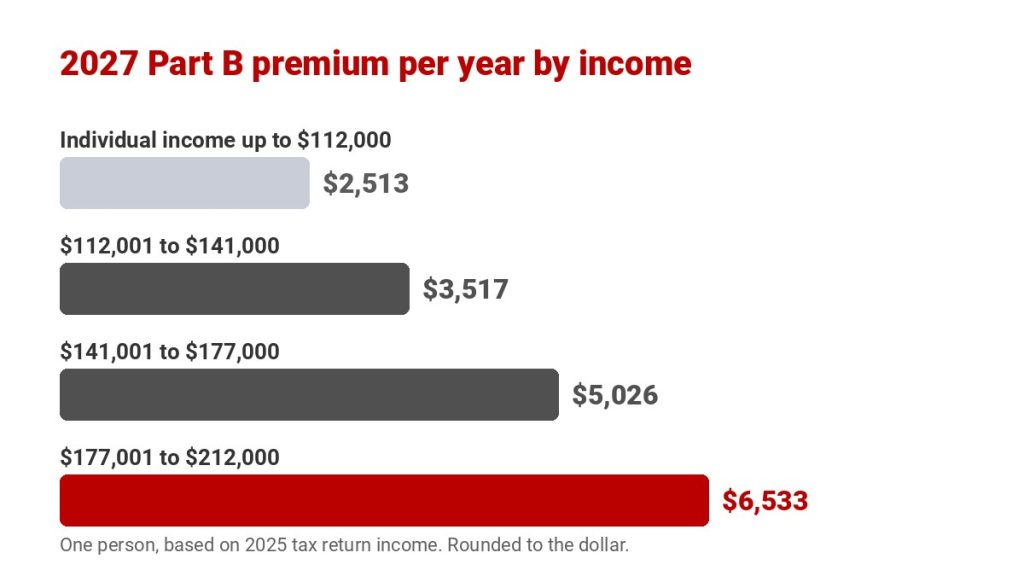
Not everyone pays the same Part B premium. If the income on your tax return from two years earlier (2025 for 2027 premiums) is above a threshold, you pay an extra amount called IRMAA. Income here means MAGI: adjusted gross income plus tax-exempt interest.
| Single | Married filing jointly | Part B per month |
|---|---|---|
| Up to $112,000 | Up to $224,000 | $209.40 |
| $112,001 to $141,000 | $224,001 to $282,000 | $293.10 |
| $141,001 to $177,000 | $282,001 to $354,000 | $418.80 |
| $177,001 to $212,000 | $354,001 to $424,000 | $544.40 |
| $212,001 to under $500,000 | $424,001 to under $750,000 | $670.00 |
| $500,000 or more | $750,000 or more | $711.80 |
People with a Part D drug plan also pay an income-related amount using the same brackets: $15.40, $39.70, $64.00, $88.30 or $96.40 a month, added to the drug plan premium.
Hypothetical example: selling a property in 2025
Lan (a hypothetical person) files single and normally has about $40,000 of income a year. In 2025 she sold a rental house at a gain, which pushed her 2025 MAGI to $150,000.
- Income bracket: $150,000 falls between $141,001 and $177,000.
- 2027 Part B premium: $418.80 a month instead of $209.40, so $209.40 more each month.
- Extra for the year: $209.40 × 12 = $2,512.80, plus a Part D amount of $39.70 a month if she has a drug plan.
The surcharge is set one year at a time. If her 2026 income returns to normal, her 2028 premium goes back to the standard amount. People whose income dropped because of a life-changing event such as retirement, the death of a spouse or divorce can ask Social Security to review it using form SSA-44.
Calculator: what will your 2027 Part B premium be?
6 steps to take before the December 7 Medicare open enrollment deadline

- Read the Annual Notice of Change: your plan mails it in the fall. It lists changes to premiums, deductibles, benefits and the drug list for next year.
- Check your drug list: write down every medicine and dose, then compare with the plan’s 2027 formulary. A drug may move to a higher price tier or need prior approval.
- Check doctors and hospitals: in Medicare Advantage, a regular doctor can leave the network. Call the doctor’s office directly to ask.
- Compare total cost, not just the premium: a $0 premium plan may have higher copays and a higher out-of-pocket maximum. Add the yearly premium to expected visit and drug costs.
- See if you qualify for help: people with limited income and assets may get Extra Help with drug costs, or Medicaid and Medicare Savings Programs that help pay the Part B premium.
- Get free help: every state has a free Medicare counseling program (SHIP). Adult children can sit in while comparing plans so nothing gets missed.
What if you miss December 7?
After December 7, most people keep the plan they chose for all of 2027. There are a few exceptions:
- Medicare Advantage Open Enrollment (January 1 to March 31, 2027): people already in Medicare Advantage can switch once to another Advantage plan, or return to Original Medicare and add Part D.
- Special Enrollment Periods: triggered by events such as moving out of the plan’s service area, losing employer coverage, entering or leaving a nursing home, or qualifying for Medicaid or Extra Help.
Note: if you go 63 days or more without Part D or other creditable drug coverage after becoming eligible, you may owe a late enrollment penalty added to your Part D premium, usually for as long as you have Medicare.
Original Medicare vs Medicare Advantage: how to choose
| Factor | Original Medicare (+ Medigap + Part D) | Medicare Advantage |
|---|---|---|
| Choice of doctor | Any doctor in the US who accepts Medicare | Usually in-network, may need referrals |
| Monthly premium | Part B + Medigap + Part D premiums | Part B premium, plan premium often low or $0 |
| Out-of-pocket limit | Original Medicare has none; Medigap covers most of the gap | Has a yearly out-of-pocket maximum |
| Extra benefits | Few, usually no dental or vision | Often dental, vision, hearing, fitness |
People who travel between states or see many specialists often prefer Original Medicare with Medigap. People who want a low monthly premium and stay in one area often consider Medicare Advantage. One key caution: outside the first 6 months after Part B starts, buying Medigap in many states can require health questions and may be denied or cost more. So moving from Medicare Advantage back to Original Medicare does not guarantee you can get Medigap again.
What Medicare does not pay for

Medicare is an important foundation, but it does not cover everything. Costs older adults often pay on their own:
- Long-term care: Medicare does not pay for ongoing help with bathing, eating or dressing at home or in a nursing home. This is the biggest cost many families do not expect. See the chronic illness rider in life insurance.
- Dental, vision and hearing aids under Original Medicare.
- Deductibles, coinsurance and income-based surcharges like the table above.
- Funeral costs and money left to children and grandchildren.
One detail many people miss: income from some sources, such as loans from a life insurance policy or qualified Roth IRA withdrawals, does not count toward MAGI, so it does not push Part B into a higher bracket. Withdrawals from a traditional 401(k) or traditional IRA and gains from selling property do count. See also the 2027 tax brackets.
Common challenges for Vietnamese-American families during Medicare open enrollment
- Mail only in English: important letters get ignored. Adult children can help open and read plan mail in September and October.
- Sales calls: never give your Medicare number to someone who calls you. Medicare does not call to sell plans.
- Choosing by gifts: do not pick a plan because of gifts or shopping cards. Choose based on the drugs you take and the doctors you see.
- Not knowing about Medicaid: people with both Medicare and Medicaid have special plans and can change more often during the year.
Learn more about how the US healthcare system works, and about coverage for people under 65 in ACA subsidies 2027.
A simple worksheet to compare two plans
Comparing plans is easier with numbers on paper. For each plan, write down and add up:
- Yearly plan premium: monthly premium × 12 (do not forget your Part B premium, which you pay with either choice).
- Drug costs: use the plan’s price for each of your medicines for the full year, including any deductible.
- Doctor visits: number of primary care and specialist visits you expect × the copay for each.
- A bad-year check: the plan’s out-of-pocket maximum, in case of a hospital stay or surgery.
The plan with the lowest total for a normal year and an acceptable bad-year limit is usually the better fit. Keep the worksheet so next year’s review is faster.
Frequently asked questions
When does Medicare open enrollment end in 2026?
It runs from October 15 through December 7, 2026. Changes take effect January 1, 2027.
What is the 2027 Part B premium?
The standard premium is $209.40 a month and the Part B deductible is $292 a year. Higher earners pay more based on their 2025 tax return.
At what income do you pay more for Part B?
For 2027, single filers with MAGI above $112,000 or joint filers above $224,000 on their 2025 tax return pay the IRMAA surcharge.
What happens if I do nothing during Medicare open enrollment?
Your current plan usually renews automatically with its new 2027 costs and benefits. Read the Annual Notice of Change to make sure it still fits.
Does Medicare pay for long-term care?
Not for ongoing help with daily activities. Medicare covers skilled nursing only under certain conditions, up to 100 days after a hospital stay, with a $222 daily coinsurance from day 21 in 2027.
Planning for parents and grandparents after 65?
Thinksmart Insurance explains in English or Vietnamese the costs Medicare does not cover, such as long-term care and end-of-life expenses, and charges nothing for advice. Contact us →









 Thinksmart Insurance