
Can a herniated disc insurance claim really pay out, and how much? The story of Ms. Kieu Nga, a 55-year-old nail technician in Nevada, gives a concrete answer: she received a total of $105,000 tax-free in three payments from the living benefits of her IUL policy, after two spinal surgeries. She bought that policy in 2019 even though her husband and relatives were against it.

Who is Ms. Nga and why did she buy insurance?
Ms. Nga has worked in nails for more than 20 years in Nevada, earning about $5,000 to $6,000 a month. In 2019, while still healthy, she looked into Thinksmart Insurance’s IUL program with three goals:
- Retirement: money she could use about 20 years later.
- Her children: financial support for them if she passed away.
- Independence: her own resources so she would not burden her family.
Strong opposition, but she signed anyway
Her husband strongly objected because the agent worked only by phone and social media. Friends and relatives told her that buying insurance while healthy was bad luck. Ms. Nga researched on her own, watched real video testimonials from cancer patients who had received benefits, and decided to “just buy it and leave it there.” Her policy was an IUL from National Life Group (NLG) with total protection of up to $300,000.
How Ms. Nga’s herniated disc insurance claim worked
About two years after she joined, in early 2021, Ms. Nga began to feel numbness in her hands and feet. Her herniated disc grew so severe that she could no longer sit and work. Her claim journey took four years:
| When | What happened | Result |
|---|---|---|
| Early 2021 | Numbness; called NLG for help. She could still care for herself. | Not yet eligible |
| 2022 | After spinal surgery, filed her first claim. | $35,000 |
| 2023 | Second surgery; still unable to resume normal activities. | $35,000 |
| 2024 | Initially denied because records did not confirm eligibility. Thinksmart arranged a doctor’s re-evaluation. | $35,000 |
| Total, paid in full | $105,000 |

Which benefit covers a herniated disc?
Ms. Nga was not paid for a “critical illness” such as cancer. She was paid under the chronic illness living benefit. The key condition is that the insured cannot perform at least 2 of 6 basic activities of daily living for more than 90 days. These six activities usually are eating, bathing, dressing, toileting, transferring (in and out of a bed or chair) and continence.
So a herniated disc diagnosis alone is not enough. The carrier looks at how the condition limits daily life, and the medical records must document it. That is why she was turned down in 2021, and why her 2024 claim was approved only after a doctor re-evaluated her.
Under the NLG rules described in her story, the carrier pays up to 24% of the total policy value per year, for up to 5 years, depending on health at the time of the claim. A new claim must come at least one year after the previous one; if filed earlier, NLG waits until the year has passed.
Documents and the 5 claim steps
What to prepare
- A completed claim request form.
- Photos of the front and back of your driver’s license.
- Medical records confirming the condition.
5 basic steps
- Report your health condition.
- Submit a request to open a claim.
- Complete the required paperwork.
- The carrier (NLG) reviews the claim.
- Receive the decision and choose how to be paid.
The Thinksmart Insurance office supported Ms. Nga from opening the claim through paperwork and follow-up until NLG issued its decision and payment. Learn more about our insurance claim support.
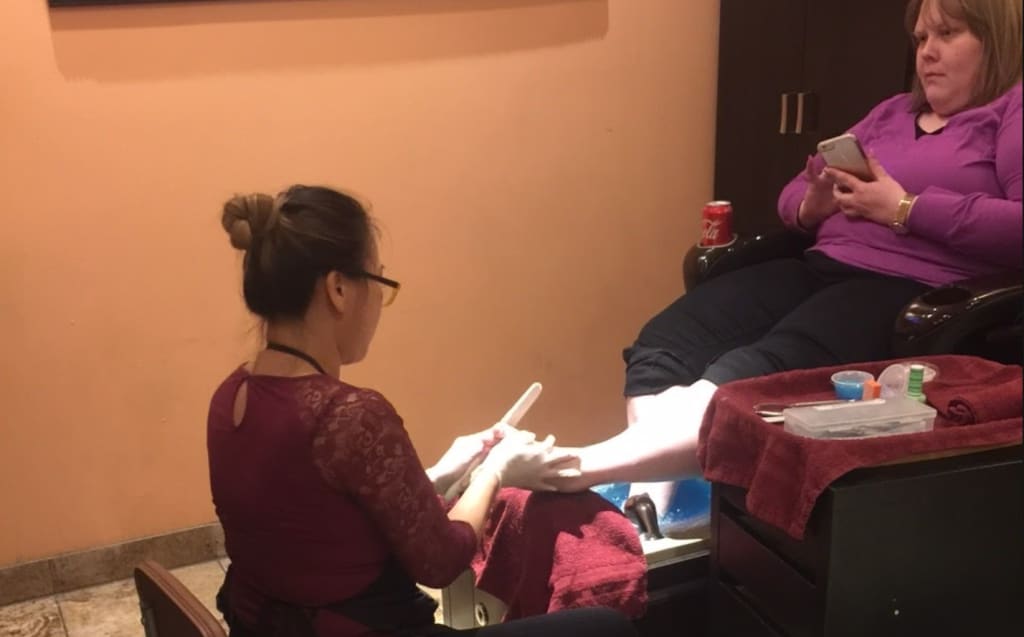
Video: Ms. Nga tells her story

Insurance payout vs. SSDI
Ms. Nga also receives SSDI (Social Security Disability Insurance). Here is how the two compare:
| Criterion | Insurance payout | SSDI |
|---|---|---|
| Source | Policy living benefits | SSA Disability Insurance Trust Fund |
| Timeline | 1–3 month review; paid within 3 days of approval | 1.5–3 years in total |
| Review | Medical records | Non-medical rules (taxes paid, work credits) plus a 5-step medical review |
| Amount | Large, tax-free | About $1,620/month (2025), $1,690/month (2026) |
Thinksmart Insurance does not handle SSDI. The lesson from her story is that the two sources complement each other, but only the policy’s living benefit gave her a sum large enough, fast enough, when she had to stop working.
Lessons for nail technicians and physical workers
- It does not have to be a critical illness. With a chronic illness benefit, what matters is how the condition affects daily living.
- Medical records are the key. They must show which activities you cannot do on your own, and for how long.
- A denial is not the end. Ms. Nga was turned down twice (2021 and her first 2024 attempt) and still received all three payments.
- Buy while healthy. She signed in 2019, about two years before her first symptoms.
If you want similar living benefits, explore IUL Secrets. If you only need low-cost protection for a set period, see Term Life.
Frequently asked questions
Does life insurance pay for a herniated disc?
It can, if the policy includes living benefits for chronic illness and the insured meets the carrier’s conditions. Ms. Nga was paid by National Life Group because she could not perform at least 2 of 6 basic activities of daily living for more than 90 days.
Why was Ms. Nga’s first claim denied?
In early 2021 she only had numbness in her hands and feet and could still care for herself, so she did not yet qualify under the chronic illness rider. Her claim was approved after spinal surgery in 2022.
Can you file more than one claim on the same IUL policy?
Under the National Life Group rules described in her story, the carrier pays up to 24% of the total policy value per year, for up to 5 years, depending on health at the time of the claim. Each new claim must be at least one year after the previous one. Ms. Nga received three payments of $35,000.
What documents does a herniated disc insurance claim need?
A completed claim form, photos of the front and back of your driver’s license, and medical records confirming the condition.
How is an insurance payout different from SSDI?
The insurance payout comes from the policy’s living benefits, is reviewed on medical records, usually takes 1 to 3 months, and is a large tax-free sum. SSDI is a government benefit that can take 1.5 to 3 years and pays a much smaller monthly amount.
How long does it take to get paid?
For Ms. Nga, the review took more than 3 months. Once approved, payment arrived within about 3 days.
Not sure whether your policy has living benefits?
Thinksmart Insurance can review your policy and help with claims at no cost, in English or Vietnamese. Talk to us for free →









 Thinksmart Insurance