
IQ is one of the most popular metrics to assess human thinking and reasoning abilities. It’s not just a number; IQ reflects various factors such as memory, language skills, logic, and problem-solving abilities. Thinksmart Insurance will explore the average IQ and how to measure it most accurately in this article.
What is the Average IQ?
The average human IQ ranges from 85 to 115 – most of the global population falls within this range. A 2020 study based on data shows that the average global IQ is around 98. Those with an IQ below 70 are considered intellectually disabled, while those with an IQ above 120 are considered geniuses.

Moreover, the level of IQ varies between countries. For instance, countries like Japan, Singapore, and South Korea have a higher average IQ, typically above 105. Meanwhile, some other countries, particularly developing ones, have a lower average IQ.
Below is a table of the average IQs of various countries, based on research published in 2019:
| No. | Country | Average IQ |
| 1 | Japan | 106.48 |
| 2 | Taiwan | 106.47 |
| 3 | Singapore | 105.89 |
| 4 | Hong Kong | 105.37 |
| 5 | China | 104.1 |
| 6 | South Korea | 102.35 |
| 7 | Belarus | 101.6 |
| 8 | Finland | 101.2 |
| 9 | Liechtenstein | 101.07 |
| 10 | Germany | 100.74 |
Currently, Vietnam’s average IQ ranks 59th in the world. This indicates that despite the differences between countries, IQ is not a determining factor for the overall potential of a nation or an individual.
Top 13 People with the highest IQs of all time
Below is a table listing the IQs of 13 of the most intelligent and influential individuals in the development of science:
| Name | IQ | Notable Achievements |
| YoungHoon Kim | 276 | Very little information is available about his life and achievements. |
| William James Sidis | 250 – 300 | Learned to read at 18 months, mastered multiple languages by the age of 6, graduated from Harvard University at 16, and held multiple degrees in mathematics, philosophy, and psychology. |
| Marylin von Savant | 228 | Famous American writer recognized for her logical thinking, problem-solving skills, and mathematical abilities. |
| Christopher Hirata | 225 | Astrophysics PhD from Caltech at 22, developed mathematical models explaining dark matter behavior in the universe. |
| Johann Goethe | 210 – 225 | German writer, scientist, and philosopher with significant contributions, and a superior mind in multiple fields. |
| Terence Tao | 210 | Mathematicians were awarded prestigious prizes like the Fields Medal and the Breakthrough Prize in Mathematics for contributions to harmonic analysis, differential equations, and number theory. |
| Leonardo Da Vinci | 180 – 220 | Painter, sculptor, architect, scientist, and inventor – the Renaissance polymath known for works like the Mona Lisa and The Last Supper. |
| Isaac Newton | 190 – 220 | One of the greatest scientists in history, whose laws of motion and universal gravitation laid the foundations for modern physics. |
| Marie Curie | 180 – 220 | Physicist and chemist known for pioneering research in radioactivity. She was the first woman to win a Nobel Prize and the only person to win two Nobel Prizes in different fields (Physics and Chemistry). |
| Nikola Tesla | 130 – 310 | Inventor and electrical engineer who revolutionized electrical engineering and wireless communication, laying the foundation for alternating current (AC) and modern electrical systems. |
| Nicolaus Copernicus | 160 – 200 | Renaissance astronomer and mathematician, best known for his heliocentric theory (the Earth and planets orbit the Sun), which sparked the Scientific Revolution. |
| Albert Einstein | >160 | A genius physicist who developed the theory of relativity (famous formula E=mc²), greatly influenced modern science. |
| Professor Stephen Hawking | 160 | One of the greatest theoretical physicists of the 20th century, known for his contributions to black hole research and cosmology, and his theory of Hawking radiation. His book “A Brief History of Time” also popularized cosmology for the general public. |
Factors that affect IQ
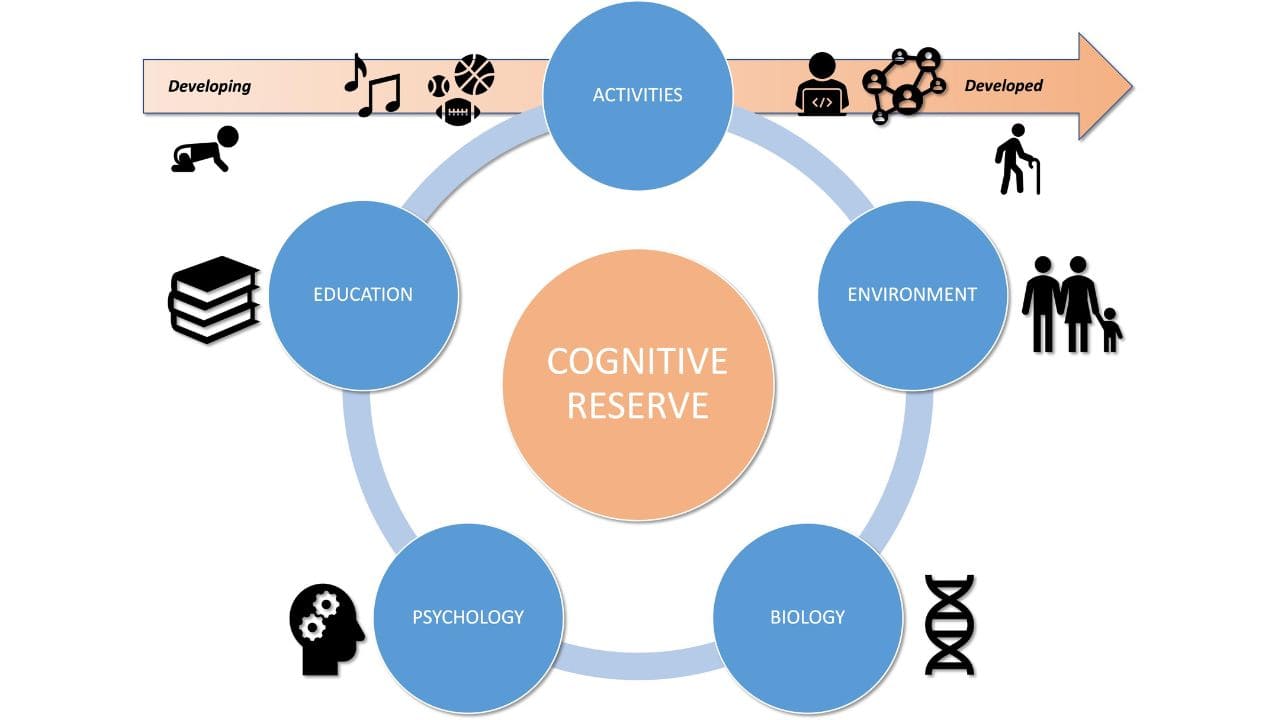
IQ is influenced by many factors, including genetics and the environment. Some studies suggest that genetics contribute to an individual’s intelligence, but it’s not the only factor. Environmental conditions, education, age, nutrition, and psychological factors all have a strong impact on IQ.
One prime example of the highest IQ ever recorded is William James Sidis, whose IQ ranged from 250 to 300, almost double that of the famous physicist Albert Einstein (>160). However, IQ is not the only standard for assessing a person’s intelligence. Each person has their strengths, and IQ measures only one aspect of intelligence.
Moreover, the lack of training and learning can diminish an individual’s ability to fully realize their intellectual potential, regardless of their genetic IQ.
How to measure IQ: Common methods
To know your exact IQ, you need to take specialized tests. Below are some popular methods for measuring IQ:
- Wechsler Intelligence Scale for Children (WISC-V): This is the fifth edition of the Wechsler test, designed for children aged 6 to 16. It assesses various areas such as verbal comprehension, spatial reasoning, short-term memory, and processing speed. It is widely used in schools to evaluate children’s learning capabilities and to identify children with special learning needs.
- Wechsler Adult Intelligence Scale (WAIS): This test is designed for adults aged 16 and older. It evaluates general intelligence through multiple assessments including verbal comprehension, visual reasoning, working memory, and information processing speed. WAIS is a principal tool for assessing adult intelligence in various fields, from medicine to psychological research.
- Stanford-Binet Intelligence Scale: One of the oldest IQ tests, developed from the original work of Alfred Binet and improved by researchers at Stanford University. It measures five key areas: quantitative reasoning, visual reasoning, short-term memory, language comprehension, and information processing speed. It is widely used in psychological research and for assessing the intelligence of both children and adults.
- Differential Ability Scales (DAS): This IQ test is designed to measure the cognitive abilities of children aged 2.5 to 17. DAS provides detailed information on children’s cognitive abilities, including language skills, spatial reasoning, and memory, and is widely used for assessing children with special educational needs.
- Peabody Individual Achievement Test (PIAT): PIAT is designed to evaluate academic achievement in children aged 5 to 22, assessing areas like reading comprehension, mathematics, spelling, and language. PIAT is a useful tool for identifying academic issues in students, helping teachers and parents better understand a child’s learning abilities.

Stanford-Binet IQ test
These IQ tests have been certified and are widely used around the world. Each test evaluates a different aspect of intelligence, such as mathematics, language, logical reasoning, and more. Results are combined to provide an individual’s IQ score. It’s important to note that IQ measurement methods can vary depending on age and intellectual development.
IQ isn’t everything
Although IQ may reflect some aspects of reasoning and intelligence, it is not the only measure of a person’s intelligence or success. There are at least 7 different types of intelligence: including logical, linguistic, musical, bodily-kinesthetic, spatial, interpersonal, and social intelligence. Therefore, don’t worry if your IQ isn’t as high as you hoped. Intelligence and success depend on many factors, such as patience, training, and a positive attitude.
Conclusion
IQ is a useful tool for measuring intelligence, but it doesn’t determine everything. The average IQ ranges from 85 to 115, with significant differences between countries. However, IQ is influenced by the environment and education quality. And remember, intelligence is not confined to a single number.
Above, Thinksmart Insurance has provided information about the average IQ and the most accurate ways to measure IQ. Follow us to stay updated with useful information about health, finance, and insurance. If you have any questions, call our hotline at (678) 722 3447, message us via Messenger, or email Support@Thinksmartinsurance.com.








 Thinksmart Insurance